July 09, 2015

PART 1: ROME, OH GLORIOUS - UNBEAUTIFUL - ROME!


KEYWORDS: Rome, Italy, economy, 'la bella vita', tourism

SUMMARY: Travelling to new places offers up unique experiences. But in an ancient city like Rome, the traveller is inclined to experience what's considered most popular, whether that's a place or an event. Visiting the Colosseum and tossing coins into the Trevi Fountain are, for example, popular with tourists. During a recent visit, I set out to experience the city without any "must-see" list in hand. Even if I might miss Rome's infinitely beautiful Colosseo, I would move according to what moved me. Believing that all cities have more to offer than meets the eye, I wouldn't discount the value of the unbeautiful. Needless to say, Rome would facilitate a journey full of intellectual musings that would ultimately lead to an inner journey where, for a time, self recognized Self.


St. Peter's Basilica, Rome, Italy (May 2015)
Rome is a beautiful city in a beautiful country. Tourists, pilgrims and locals alike will tell you so, and this in spite of the economic woes that many in Bella Italia face. (Unfortunately, according to some economists, there's little indication of things improving.) Travel guide books like Lonely Planet heap praise on Rome and urge tourists to spend time exploring its elegant avenues and piazzas, cultural venues, ruins, and nightlife - after all, they're not inclined to rue a country's economy! But even without prompting one wants to explore Rome. Maybe because history informs us that it's a wondrous place or it might be the excitement of knowing that in this city, the 'good' in good living still stands for something (see: aperitivo at Zanzara). So why would I set out to explore the unbeautiful as much as the beautiful on a recent trip to Rome?


Tiburtina Bus Station, Rome, Italy (May 2015)
This article isn't an endorsement of Rome, rather it's an exploration of how I - a tourist - negotiated this almost mythical place/space/terrain upon and within which the notion of 'la bella vita' (the good life) plays out. And, furthermore, how I, amidst all the praise-worthy beauty, sought out the mundane, even the woeful, that's just as Roman as St. Peter's, the Pantheon or Villa Borghese - at least that's the premise I put forth here. "Rome, oh glorious, unbeautiful Rome, reveal yourself," I pleaded inwardly as my bus pulled into Tiburtina station. 

In this penultimate tourist attraction, everyone expects you to go marvel at the Colosseum, toss coins into the Fontana di Trevi, and linger on the Spanish Steps. It's as if, upon her arrival, the traveller is handed a set itinerary from which she'd be foolish to deviate. Rome is hers to discover, if … I would resist. A lone traveller in as sensuous a city as Rome usually wishes for the unexpected. I was no different. But what's more, the city - its moving parts, which we take for granted - not the myth or popularized image - is what appealed to me. Rather than an itinerary, I would follow my curiosity: to meet the people and observe the circumstances that keep the Eternal City of Rome moving. 

Crossing streets, turning corners, stepping on to metro cars, walking through parks, climbing hills, sitting on benches, entering shops, browsing outdoor markets, ascending stairs, descending stairs, crossing bridges, stopping... In Rome, I moved in all kinds of ways. I also stopped - often - to behold the sight before me. Below are some of the 'moving parts' I stopped to photograph. 


1.
Waste Collection Point, Rome, Italy (May 2015)

2.
US-based Patagonia Sporting Boutique, Rome, Italy (May 2015)

3.
Pope John Paul II, Termini Station, Rome, Italy (May 2015)

4.
Musician in Metro Car, Rome, Italy (May 2015)

Now just memories populated by unwitting subjects; yet, they're my own memories that reflect a highly personal itinerary. And therein lies the power of the journey: if we invite the questions about how we're choosing to move, we start to realize that our experience of a wondrous -- or not-so-wondrous -- place is never a foregone conclusion. We can choose to turn left and not right, go down rather than up, and so on.

Of course, seeing accompanies moving. So in re-viewing the photographs above, I was prompted to ask myself why my mind (or brain), through its many filters, settled on these particular scenes. Briefly, all four photos connect to a core theme that preoccupies me: human in/justice. From economic migration and religious freedom to the social responsibilities of business and addressing waste and over-consumption, these are the 'unbeautiful' layers that make for a compelling social story. 


June 02, 2015

PART 1: ACTON - A LONDON NEIGHBOURHOOD TO WATCH

KEYWORDS: N/A (Visuals-based post)

SUMMARY: N/A


NOTE: Audio-recording to be considered.

Like London, Acton is old. Though, these days, it's referred to as an "up & coming" neighbourhood, which suggests youthfulness. (It seems that descriptor helps realtors sell houses.) Due west of Central London, it's home to over 60 000 residents. On a recent trip to England, I stayed with friends in their charming Acton home (not pictured). When out & about in the neighbourhood, I couldn't help but take photographs of what and who I saw. Acton, in many ways, is a microcosm of modern-day England. For the reflective urban dweller, that's enough to make her think, stop and click.

The Photographs (my interpretation included):


#1

#2
(#2) The graffiti pictured above was found on an exterior wall that ran along the sidewalk to separate private homes from pedestrians. It would be noticeable to anyone standing at the bus stop adjacent to the wall. On that March day, I was waiting at that particular bus stop -- and took a photograph. Somaliland, according to BBC News, is a self-declared independent territory.


#3


#4
(#4) On Acton's high street, you'll find the major grocer, Morrison's. The Metropolitan Police sign shown above is visible to those who enter and exit this busy store. While I was in Acton, I didn't encounter any problems that required police intervention.


#5

(#5) Sam, a local nail salon owner, pictured above (permission granted for publication), reassured me that Acton was a safe neighbourhood, including for women. Keep in mind that Sam lives elsewhere in Greater London.

#6


#7

(#7) "I Love Acton". Amongst community housing, this sign - this gesture - shows that Acton is more than a neighbourhood, it's home.     


'ACTON' in the news: 

(1) The Telegraph (UK): http://www.telegraph.co.uk/news/uknews/immigration/9831912/I-feel-like-a-stranger-where-I-live.html
(2) IB Times (UK Edition): http://www.ibtimes.co.uk/abdul-hadi-arwani-imams-death-shocks-acton-muslim-community-1495453
(3) Street Art News (UK): http://www.streetartnews.net/2014/11/stik-paints-big-mother-tallest-mural-in.html


UPCOMING! PART 2: SILICON FEN - ENGLAND'S 'SILICON VALLEY' - SETS HIGH AMBITIONS

March 28, 2015

GANDHI ARRIVES IN LONDON

KEYWORDS: Gandhi, United Kingdom (UK), India, colonialism, elections, Acton

SUMMARY: No summary included.


LISTEN TO AUDIO RECORDING.
STORIFY Version Unavailable.


NOTE: Two audio-visual recordings below.


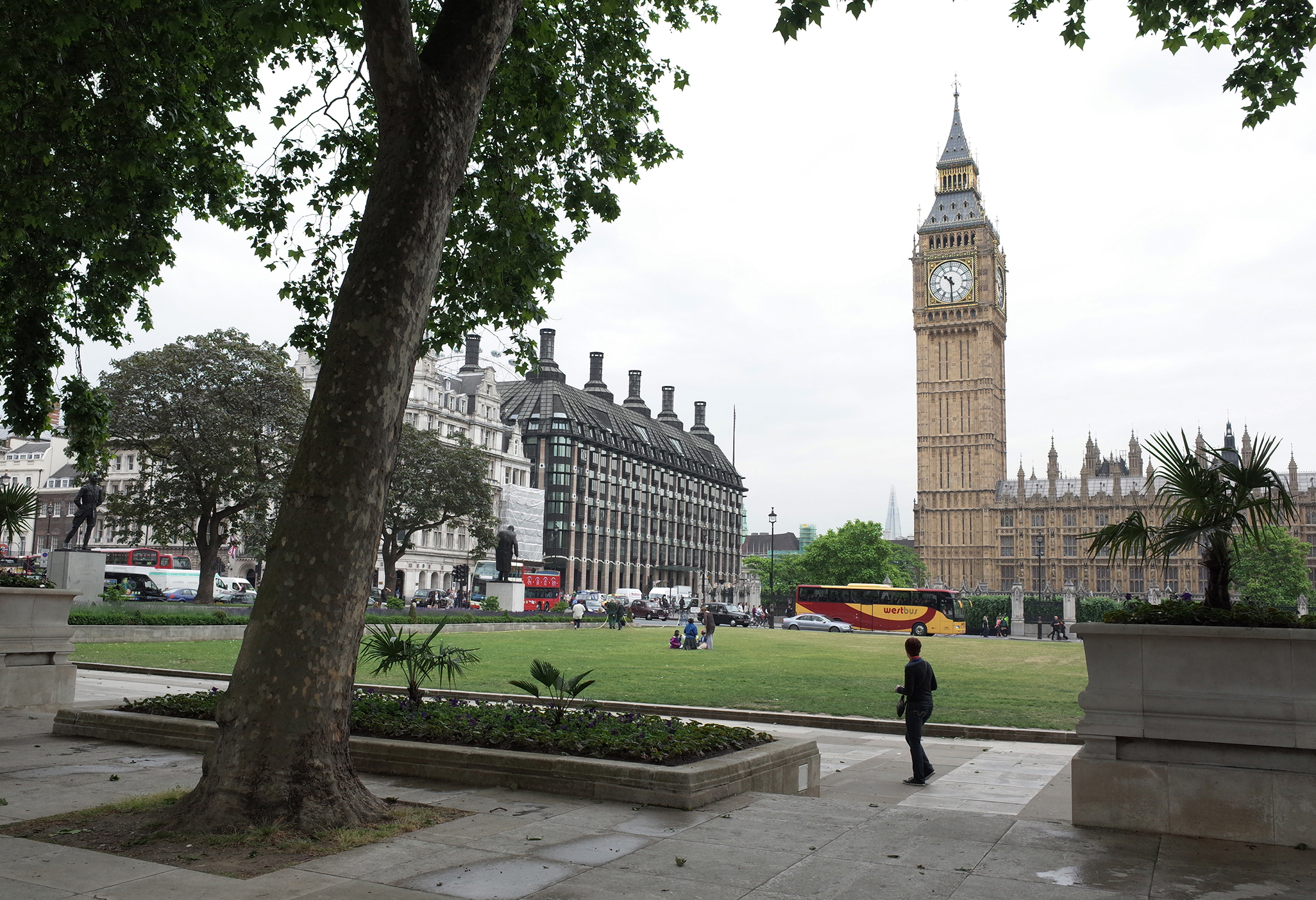
Gandhi's newly-unveiled statue on March 14, 2015, London, UK

In 1915, Mohandas Gandhi launched his campaign against british colonialism. A century later, his demure figure is cast in bronze and unveiled at London's Parliament Square. The work, by British sculptor Philip Jackson, is described as a "magnificent tribute" to India's spiritual father. Surely, the audience assembled sense the irony of this historical event.

The morning of Saturday, March 14 was grey and cool yet the special stands erected inside the Square were full of spectators (see video right below). Fittingly dressed in dark suits, Gandhi's grandson, Gopalkrishna Gandhi, Prime Minister David Cameron, India's Finance Minister, Arun Jaitley, and Bollywood royalty, Amitabh Bachchan, exclaimed their admiration for Gandhi's singular focus on achieving India's independence. This was a political event, make no mistake about it: a UK election is only 5 weeks away and there are some 1.4 million British-Indians, many of whom belong to an influential middle/professional class, worth courting.  


I arrived well after the formal ceremony had ended (see above video). However, I really had come to see (or should I say 'view'?) Gandhiji. With the Square clear of dignitaries and members of the public, I could poke around, albeit just between the fencing as the area was now officially closed. What I found out was that the historical unveiling of Gandhiji - of his statue - invited a deeper discussion about his ideals. And this I discovered in an unlikely exchange between tourist and Londoner.

Listen here for that perspective:


My (a tourist) conversation with the security guard (a Londoner) continued for another ten minutes or so. We talked mostly about Greater London's non-white immigrant neighbourhoods, like Acton, where I was staying. He and I agreed that in spite of the relative calm, divisions that cut across class and religion clearly exist. And with youth unemployment an ongoing concern, such divisions do not bode well for the Capital or the country as a whole. Who will step in as 'spiritual father' - or mother - to the disenfranchised? (We can speculate who has stepped in.) Will they be deserving of a bronze statue one hundred years from now? 

In a way, Gandhi's fight against British oppression seems more straightforward than Britain's present-day equality battle. However simplistic this may sound: independence is one matter, equality but several rolled into one. I suppose this should come as no surprise: in a country that will honour the likes of Mandela, Disraeli, Churchill, and Gandhi (missing women duly noted) all on the same green square patch of land, there is clearly no 'finish' line. Someone, perhaps not as illustrious as Mahatma Gandhi, is always arriving on these shores. 

ADDENDUM: As a young man, Gandhi spent three remarkable years in London. Here's an extract from a 1942 (six years before his assassination) newspaper interview in which he expresses his deep affection for the City. 

Source: India: Another Way of Seeing, GRANTA, Winter 2015


February 12, 2015

WHAT DOES INDIA'S PM MODI HAVE TO DO WITH ME?

KEYWORDS: India, Narendra Modi, Indian Diaspora, Madison Square Garden

LISTEN TO AUDIO RECORDING
READ STORIFY VERSION - FORTHCOMING


SUMMARY: In 2014, India elected Narendra Modi as Prime Minister. Under his right-of-centre leadership, India will chart a different course, economically and culturally, as the Financial Times suggests. Just how successful his Party, the BJP, will be this time round will depend on a multitude of factors, not least of which is Modi's ability to communicate his vision.


PM Narendra Modi delivering a speech at
Madison Square Garden in New York City (credit: ibtimes)
This may be old news: in May India elected its 15th Prime Minister, Narendra Modi. His party, the centre-right Bharatiya Janata Party or BJP, bills itself as "The Party With a Difference." An unoriginal slogan it might be yet it does manage to draw attention to its rivals' failings - perceived or actual. During the last election cycle, the BJP's main rival was the legendary Indian National Congress Party (recently led by Rahul Gandhi, grandson of former PM Indira Gandhi). While the BJP's history is not as storied - in fact, it's been rather sordid - it has steadily built both its political brand and voter base since its inception in 1980. Indeed, under Atal Bihari Vajpayee, the party was twice rewarded with the "top job," first in 1996 (short-lived) and then again in 2004. With Modi's election, the BJP celebrates its third major political victory in a history spanning nearly four decades. This time round, however, saffron may still be fashionable, but India's atmosphere is palpably different. And, it's not just resident Indians who've taken notice. 

Today, India's population exceeds 1 billion; the middle-class is growing steadily; the information technology industry is highly coveted; and foreign direct investment (FDI) remains substantial. The world beyond India has changed, as well, with some describing it simply as volatile. Moreover, the Internet, with all its trappings like Facebook, YouTube and Twitter, now mediates our lives. While reality can't be summed up neatly, these modern inventions - like others that came before - shape our political reality; arguably, they do so like no other time in human history. The interface between us and our (elected) leaders has been utterly transformed.

If Modi is to be seen as 'better' than his predecessor, PM Manmohan Singh (Congress Party), the middle-class, IT industry and FDI will certainly need to continue growing. Yet, Modi is pushing an even more ambitious agenda of economic reform which seeks to help the most vulnerable - at least, that's the hope. Then, there's Modi's own growing desire to expand his presence and popularity beyond India. It seems that his election couldn't have been more timely: the business-minded politician rented out the famed Madison Square Garden in New York City for a rally supported by his Indian-American fan base. 


Inside Madison Square Garden (credit: blog.reuters.com)


This would be one heck of a spectacle. Whether he saw it as good statesmanship or a public relations ploy - or both - Modi added a twist to the old interface: the live speech (in Hindi) that lives on You Tube. Under Modi's watch, it seems the "East is Rising" mantra will itself rise in importance. And, when it does, the Indian diaspora will know it wasn't a mere accident. 

I'm Indian, ethnically. I've visited India many times but as a foreigner. What does PM Narendra Modi have to do with me? He's showing that no country is merely a symbol; that the "motherland" can embrace the kind of experimentation typically reserved for childhood; that India, as I know it, is ephemeral because, like any sociopolitical entity, it's always in flux. 


Although, I've a feeling that saffron will long remain the fashion of the religious set.


December 29, 2014

CANADA'S HUMANITARIAN SECTOR GEARS UP TO ADAPT AND INNOVATE

KEYWORDS: Canada, Humanitarian, Cross-Sector, Partnerships, Adapt, Innovate


Listen to AUDIO Recording
Read STORIFY Version


SUMMARY: Canada's long-standing humanitarian sector needs to adapt and innovate to meet its humanitarian goals. The Canadian Humanitarian Conference is a new platform to bring together actors within the sector to learn just how it can adapt and innovate in ways that effectively address the complex set of problems it now faces.


Adaptation. Innovation. These words are usually associated with the private sector. It’s a well-practiced mantra that business, management and employees must adapt and innovate in order to thrive in the frenetic global marketplace. Now there are signs that the humanitarian sector is cautiously following suit. The sector, made up of non-governmental organizations (NGOs) that deliver aid and assistance during human-made and natural disasters, is vast. Ironically, it’s also at a crisis point: it not only faces more demands on its resources but more complex problems related to climate change, conflict and extremism that simply have no easy solutions. To weather these changes, the Canadian humanitarian sector is coming together to learn how adaptation and innovation can improve its ability to respond effectively to the record number of people in need of assistance.

Opening Day Plenary
The 2nd annual Canadian Humanitarian Conference (CHC) held at the Aga Khan Foundation of Canada in Ottawa from December 4-5 was the result of intense collaboration led by the Humanitarian Coalition (HC) and its five core member NGOs: CARE, OXFAM Canada, OXFAM Quebec, PLAN, and Save the Children. Founded in 2007, the HC “brings together Canada's leading aid agencies to finance relief efforts in times of international humanitarian crises”; it calls itself a “one-stop-shop” for individual Canadian donors. The CHC is also emerging as the one-stop-shop for Canadian humanitarians to meet and exchange knowledge and know-how. It’s also where humanitarians can build relationships with practitioners from vastly different sectors that wish to support humanitarian goals.

Accordingly, cross-sector collaboration was a recurring theme of the conference. As experienced as they are, humanitarian organizations can still afford to learn from the private sector. Assembled for the 2nd opening plenary, delegates heard Valerie Amos, UN Under-Secretary-General for Humanitarian Affairs & Emergency Relief Coordinator, declare: “We must reform.” 

Humanitarian workers restore lives and dignity, Amos reassured delegates, but changes in the world demand that the sector reform itself to stay relevant. As she pointed out: over the last 10 years, the number of people in need of humanitarian assistance has trebled; displaced people spend an average of 17 years in displacement; attempts to politicize humanitarian work has become all too common; and, finally, women and children are the face of the crisis. Inviting businesses to help it respond better to emergencies by sharing “resources, expertise, and technology” (CHC) would put the Canadian humanitarian sector on a path of genuine adaptation and innovation that - one hopes - results in greater, sustained impact on people’s lives. 

I’m not a humanitarian worker. I’m a budding sustainable development researcher who wishes to understand why humanitarian crises happen in the first place; that’s a challenging task. However, the sectors are undeniably linked as both pursue an international development agenda that aims to basically improve people’s quality of life. Of course, this aim is highly political as everyone will not agree on what constitutes “quality of life.” I attended the CHC to learn how my colleagues, bound by the humanitarian principles of humanity, impartiality, neutrality, and independence, perceive the impact of their work. There is no question that we both wish crises could be averted. The reality is that we are both - researcher and practitioner - needed to help untangle the problems and identify root causes. How to bridge the development-humanitarian divide will likely become part of the adaptation and innovation process we are now witnessing. 

The cross-sector partnership panels provided highly interesting perspectives on how NGOs can deepen their collaborations with urban planners and engineers, on the one hand, and corporations like MasterCard and Ericsson, on the other. Panelists demonstrated respect and openness yet remained grounded. Reminding delegates that NGOs possess “reputational capital,” Rosemary McCarney of PLAN Canada warned that they would need to choose partners wisely if they wished to protect that capital. The issue of mutual benefit is central to these partnerships, perhaps more so if businesses wish to do more than offer cash donations. Sorting out those benefits shouldn’t serve as an obstacle to working together though it might mean that trust and understanding among partners needs to be built up first. This inevitably takes time and perseverance as misunderstandings surely will occur; however, if CHC2014 is any indication of the humanitarian sector’s desire to reform, it will, in due course.

The conference energized delegates, many of whom were returning to the field that very week. We should see the dynamic conversations begun inside the conference hall develop outside, where, let’s face it, adapting and innovating really matter. The CHC, in spite of being just 2 years old, is creating the foundation for a new chapter in the decades-long story of Canada’s global humanitarian contributions. Canadians should be proud that their NGOs see generous collaboration as the way forward. 


August 15, 2014

THE HUMANITIES MATTER, THAT'S A STATEMENT (UPDATED: Aug. 25th)

KEYWORDS: Humanities, human condition, technocrats


Listen to AUDIO Recording
Read STORIFY Version

SUMMARY: The humanities reflect us, shape us, provoke us and can even help us become better human beings. Yet, as an increasing number of technocrats raise the alarm about the lack of jobs and skilled people, studying the humanities is becoming less desirable. This pragmatic turn has cost the humanities their earlier lustre and meant that more of us humanists need to defend the field's enduring value.


The Human Condition, Dir. Masaki Kobayashi
The humanities matter. I admit this might sound defensive. There's been a lot of criticism directed at the field during the recent economic crisis, so humanists like myself might be accused of overreacting. But what if I put it to you as a declarative statement: the humanities matter. Now we're asked - well, you are - to at least consider that certain intellectual pursuits might be perennially important. Anthropology, philosophy, religion, literature, music - the list goes on - permit us to travel across time and space asking questions that move us toward a deeper understanding of concepts like change, place and the human condition. 

As academic disciplines, the humanities are essentially inquiry-based communities. And, even if they aren't card-holding students themselves, people from all walks of life can engage with them. Through lectures, exhibitions, film, libraries, the Internet, alone or with friends, the humanities can be accessed. What other field permits the kind of self-gazing that helps us see who we are and who we wish to become? And where the 'we' is none too specific or general? Admittedly, all this might be too existentialist for them, but the technocrats in our midst stand to gain from the humanities' ability to highlight that we are - them included - a diverse, values-driven, messy lot, and that no one group will ever hold all the answers. There's humility in that lesson. And, if we know anything about today's state of affairs, it's that humility is sorely lacking. Now, how can we say that self-gazing is just a time-waster?

Maybe I take for granted that social and self understanding are an essential part of my life. In writing this article, I need to ask myself why the humanities matter to me. After some self-gazing, I've concluded that I'm troubled that we struggle to co-exist and prosper on what is now - yes, science has proven to be helpful here - a damaged planet. Knowingly, I turn to sources like poems and stories, philosophical musings, old and new music to make me feel more connected to the continual flow of pain and suffering. Does this inclination which I've turned into an ability make me employable? Is feeling others' pain and suffering, including my own, a skill? I think so. It even has a name: empathy. Those same sources also make it utterly clear that the past informs the present; that change might be constant but feeds on change itself; and that our place is as much about status as it is about geography. The humanities can facilitate these kinds of profoundly meaningful lessons; indeed, they have for me. 

Critics tend to undervalue the transferable skills gained through formal studies of the humanities. Thinking skills like analyzing and synthesizing, communication skills like speaking and writing, and general organizational skills like project and time management, are examples of transferable skills. Also known as 'soft skills', they don't, however, amount to subject matter expertise. A humanist is not an economist, a political scientist nor a financial analyst, and that is viewed as a weakness. The humanist cannot "fix" social or economic problems, say the critics. According to their (narrow) perspective, intellectual pursuits are rather useless given the sheer quantity and urgency of today's problems: we need people who know how to fix problems not just deconstruct them. 


May Day celebrations in Paris, France (2014)
Yet something rather sinister happens when human knowledge, exploration, and growth start to be conflated with things like 'market economy,' 'commodity,' and 'output': we begin to lose a sense of perspective - or should I say perspectives? As a result, our emotional life flattens and we become less empathetic. Our fellow human beings start to appear one-dimensional, like sheets of paper rather than corporal souls. And while paper is malleable, in the end, it's also disposable. Without the ability to connect, people can no longer see themselves reflected in others. Disconnection grows into something far worse, dislocation. 

Writing, speaking, making, composing, devising, unearthing, these are acts that the humanist performs. Through them, she connects, locates herself in the broader social context, and helps untangle her society's problems. In other words, the humanities help to preserve her humanity. Yet this achievement benefits us all: through the humanist, we see what it is we can become - what we forgot we could become. As we regain perspective, our memories start to return. We fold ourselves into paper planes and once more travel across time and space. 

Let the technocrats raise their alarm, we humanists shall rise above the din and co-create a gentler home.


ADDENDUM: Click here for YouTube video of Kobayashi's Human Condition, Part 1 (1959).

March 08, 2014

TO BE WOMANLY

Dr. Vandana Shiva, Eco-Feminist
KEY TOPICS: Eco-feminism, Monsanto, Dr. Vandana Shiva, karma


Listen to AUDIO RECORDING // Read STORIFY version


SUMMARY: In our era of neo-liberal capitalism, which has accelerated global income inequality and ecological degradation, Dr. Vandana Shiva offers this overarching solution: be more womanly. To many, this may sound merely philosophical, perhaps even fanciful; but it really is a practical solution, if one considers what it means. Mahatma Gandhi, himself, thought so and now in our new millennium Dr. Shiva exhorts us all to care for and share with our fellow human beings. 


Mahatma Gandhi wanted to be more womanly, Dr. Shiva tells the Toronto audience assembled in The George Stroumboulopoulos Show's CBC studio. He wanted to inhabit the virtues of caring and sharing as he recognized their value in not just enriching but sustaining life. Gandhi was certainly prescient for at no other time has our species' survival rested on us caring more about and sharing more with others. Dr. Shiva, herself, is womanly and not because she dresses in elegant silk saris and maroon bindis that fill the gap between her brows. (Though her external appearance does, in my opinion, buttress her feminist views.) Trained in quantum physics, that opaque field of science, Dr. Shiva chooses instead to apply her specialized knowledge to the science of farming and food. In protest of the corporate hijacking of both farming practices and our global food supply, she is devoting her days to creating an alternative reality that is indeed more womanly: an earth shared by all, not one controlled and manipulated by a few.


Durga Mata, Hindu Goddess
"We are diverse; we have pluralistic ways of thinking," Dr. Shiva tells the audience, alluding to Durga Mata of the Hindu pantheon. So any attempt to turn industries and practices, like agriculture and farming, into a single, monolithic entity that disproportionately serves the owners is not just unwise, it is morally wrong. Stated differently, these attempts are antithetical to being womanly. As the evidence has borne out, life within this kind of reality is unbearable for the masses and, in many ways, our planet. Whole farming communities and swathes of land will continue to be damaged because of unwise farming practices devised and controlled by big business. This kind of future is unsustainable. 

Monsanto and other large agro-companies that work to own - literally, own - nature have been condemned by many for their lack of caring. Unsurprisingly, Dr. Shiva's dissenting voice is one of the loudest. If nature, in general, and seeds, in particular, provide humanity with basic sustenance, how else can the commodification of 'life' by these capitalist behemoths be regarded? We have a right to be angry. Dr. Shiva's own anger does not consume her, it propels her into ever more creative action against those she has dubbed "Life Lords" of the planet. With this, her host is decidedly impressed, as is the audience no doubt. Dr. Shiva is a doer; and when we listen to problems that seem insurmountable, we like to listen to those that "do". Depending on our own position, Dr. Shiva can make us feel energized, optimistic, even - forgive the cliche - empowered to act.


"[W]e are very good as humans at figuring out how we can exploit something, this is what we do with everything," Dr. Shiva's host claims as he leans forward in his red leather chair to receive her reply. She agrees. But how she sees it such behaviours stem from an inhumane masculinist mode of thought which, sadly, is so prevalent. However, to be inhumane is not innate, she is quick to add. We can act differently. Dr. Shiva's spontaneous hug shows her young host that being caring is not something we need to figure out, it is already within us. 


Imagine if hugs could re-humanize the Monsanto executives who lead the charge today. Fanciful, yes, to think that in the hard-nosed business world hugs alone could disrupt an established operation. The corporation is too caught up with itself and has ensnared too many equally self-interested entities (let alone individuals) to care like a human. The problem is not just big, it is enormous.


(Source: www.alt-market.com)
The "Life Lord," himself, is enormous; however, history - as recent as the last decade - has shown us that nothing is "too big to fail". The indomitable Dr. Shiva might express the same point this way: no one corporation is too big to battle. 

Gandhi believed, as I suspect Dr. Shiva does also, in the Hindu concept of karma. This is the belief that our actions, good or bad, have consequences that shape our reincarnated lives. We bring our selves to every realm, where, however subtly, we enact our values, attitudes and beliefs. Gandhi brought himself to the legal and political realms while Dr. Shiva brings herself to the realms of science and activism. Self-knowledge tends to elevate one's character and by extension one's work. 

Business and spirituality are not entirely separate, certainly if you are spiritual, but also if you consider that people do business, not the other way around. If a critical mass choose to be more womanly, then our cities and towns will become truly interdependent, and this will herald a massive shift in consciousness. 

We share this realm called planet Earth. Dr. Shiva hopes this indisputable fact will guide our present actions, which carry great consequence.


(NOTE: 'Storify' version link above.)


January 21, 2014

CURIOUS GEORGE: A CASE OF CIVILIZING OR DEMONIZING THE MONKEY?


KEY TOPICS: Anthropocentrism, racism, film, critical literacy, children


Listen to AUDIO RECORDING // Read STORIFY Version

SUMMARY:  Rarely are beloved classics critiqued. 
A European classic like 'Curious George' is a case in point. When originally published in the 1940's, 'Curious George's' privileged Euro-American audience would not have thought to look for bias. However, historical distance and a post-colonial world order that engendered multicultural politics have fostered the intellectual conditions for people to want to - need to - critique texts for their cultural assumptions. Whatever its genre - book, film - I believe "Curious George" should be critiqued. Here is a tale of a monkey captured by an adventurous white man in an unnamed jungle and forced to adapt when he is brought to the "civilized" world (England?) by his paternal "keeper." It assumes nature is intended for humans and that the Anglo West breeds civility. This is no quaint children's tale from way back when. Yet 'Curious George' is used in classrooms without, I worry, any sort of critical lens that would present school children with a more complex view of the world by engaging issues of anthropocentrism and even racism.


In single file, the class assistant ushered two dozen children from their walled classroom to the brightly-lit foyer a few metres away. It was time for Music. Smiling broadly, I stood on the edge of the well-worn oval carpet that lay in the centre. A television on a tall stand loomed behind me. 
Curious eyes gave me the once over. 'Who is this?' the children wondered. I gestured for everyone to sit down and with the assistant's help everyone did. Not surprisingly, as they sat down cross-legged, I was peppered with questions from every row: where's Ms. S.? what's your name? what are we watching? are we going to have Music? Leaning forward, I held up the 'Curious George' film case that I had hid from view. It was time to introduce George, everyone's favourite monkey (right?). For a moment, there was quiet (timing is everything in teaching). The class assistant and I exchanged smiles. Then, squeals of delight from Ms. P.'s kindergarteners that delivered a mix of pleasure and annoyance. They were excited about their upcoming lesson but they would need to listen well; I would have some thought-provoking questions to ask. "My name is Ms. A." 


The Reyersbach's
The authors of 'Curious George' were Margret and Hans Augusto Reyersbach, a married German Jewish couple. Theirs was a story of love, Nazi persecution, trans-Atlantic migration, and eventually success in America as co-collaborators on the 'Curious George' book series. Indeed, the Reyersbach's own trials and tribulations make for an incredible story. Their much beloved 'Curious George' was a creative outlet and, with the world around them so bleak, must also have been a source of entertainment and pleasure. Nevertheless, they could not have predicted that their mischievous little monkey would garner so much attention - he was an instant hit! 

"I want you to watch what happens to George, while he's in the jungle," I said to the class. My students were 4 and 5 years old, I had to be more explicit: "Do you think it's fair that he's taken out of the jungle - out of his home - and brought to another country?" By now, schooled in answering teachers' questions, the children seemed to ponder mine and offered up a balance of yeses and noes. I nervously clicked 'play' on the DVD player. I wished right then that we could have just played with the instruments. Then again, I am much better at asking questions than interpreting music notes.


Curious George smoking a pipe
The film is a series of flashbacks that chronicle George's life from the jungle to the city. The protagonist's antics are what people find entertaining. Come to think of it, 'monkey see, monkey do,' might just have come from this famous Reyersbach tale! Smoking a pipe - it seems monkeys can get high too - and mistakenly dialling the police on the telephone - you can imagine the ensuing confusion - get children, even adults, laughing out loud. When the 'man in the yellow hat' disciplines George, the laughs just continue. This simple formula - get George in and out of trouble - appears to work, in fact, it has worked for years. We take 'Curious George' for granted, and there lies the problem.


The BBC recently published an article in its 'Culture' section titled "The hidden messages in children's books." As author Hephzibah Anderson puts it, "Revisiting kids’ books in adulthood can yield all sorts of weird and wonderful subtexts, some more obvious than others." I couldn't agree more: 'Curious George's' sub-text is a good deal weird but not so wonderful. 

George wasn't born 'George' nor was he from the city. Heck, he's a bonafide monkey! The seemingly innocent man in the yellow hat decided that he wanted a monkey for his own pleasure - what else would you call co-habitating with 'George'? So, in cunning pursuit of that "exotic find," he pursued his desire all the way to where monkeys are indigenous. That's the back-story, isn't it? If it sounds familiar, it's because for too long now the object has been 'nature,' 'Africa,' the 'exotic,' while the subject - the one with visible, practical agency - the liberal, western adventurer who dons a cap and a smile knowing full well that they can return home. (Granted, these days many middle-class minorities - like me - could be characterized in that way as they seek jobs and travel experiences in far-flung places.)

What it comes down to is awareness and enough discomfort with the subtext to raise questions. That's the serious part of reading, which can really deepen children's respect for literature. I have no doubt that the opportunity to ask and answer questions can also expand children's awareness of their own ethical positions. "When you go on a trip, do you hope to find something to bring back with you?" That's a question I think I might ask next time. My students' answers will help us all 'read' the world a little better. 


(NOTE: 'Storify' version link above.)